
One of our volunteers, Adam, a permaculture enthusiast, is building this structure called a Hugelkultur, which means hill culture or hill mound in German. It’s best to build it on top of a trench and there just happened to be an existing trench right there. Adam came home to St Ives after traveling to many places where he was practicing yoga & learning about permaculture. He had plans to leave for Spain this April to search for land to build a yoga permaculture not-for-profit organisation but lucky for us, he got stuck here amidst Covid19. He is putting all his energy into creating a beautiful a permaculture garden full of vegetables, wildflowers and fruit trees in one corner of the orchard. The hugelkultur will form the entrance to the garden & can be spotted just behind our living willow dome.
Hugelkultur are no-dig raised beds with a difference. They hold moisture, build fertility, maximise surface volume and are great spaces for growing fruit, vegetables and herbs.
Hugelkultur raised beds depends on a foundation of wood. This includes things like tree trimmings, logs, clean scrap lumber or even trees that have fallen over. The slow break down of this woody base keeps soil fertility and moisture retention strong over years or even decades. You can make your hugelkultur big or small, but some of them have been built as high as six feet tall! In some cases, hugelkultur raised beds are built over entire fallen trees. Hugelkultur beds also come with steeply sloped sides. Keeping the sides sloped at 45 degrees is thought to reduce soil compaction over time, as well as increase soil oxygenation. The woody base of the hugel bed slowly breaks down over time – the cellulose and lignin-eating fungi slowly consume the woody base material, transforming the logs, branches and wood chips into sponge-filled masses with tiny air pockets. These tiny air pockets create excellent moisture-retainers, which encourage strong plant root growth. Even in dry climates, the smallest of hugels can go weeks without supplemental irrigation. Large hugels, on the other hand, can support lush growth through an entire summer without additional water.
Benefits of building a hugelkultur raised bed.
- They work very well in dry areas, even deserts, due to their outstanding ability to hold water. They require little, if any, irrigation, making them an incredibly sustainable addition to any garden. They also don’t need any fertilizer, because they are planted in almost pure compost, which is very nutrient-dense.
- The beds create different microclimates suitable for the varied needs of different plants. For example, the side facing the sun can be used for plants that require direct sunlight, where as the shadier side can be used for delicate leafy greens and kale, for instance.
- The wood used underneath the hugel bed slowly decomposes over time, so the soil warms up faster in the spring (compared to conventional flat-bed gardening). This helps the growth and germination of seeds, particularly in the spring, and allows for an earlier start of growth. The composting wood generates heat which should extend the growing season.
- The soil is also loose and aerated, meaning that it doesn’t freeze as fast in cooler areas.
- The nutrients locked up in the wood get released slowly over a period of several years. Even vegetables with a high nutrient demand can be grown without the use of additional fertilizer.
More information and lots of lovely photos on www.permaculture.co.uk/benefits-hugelkultur
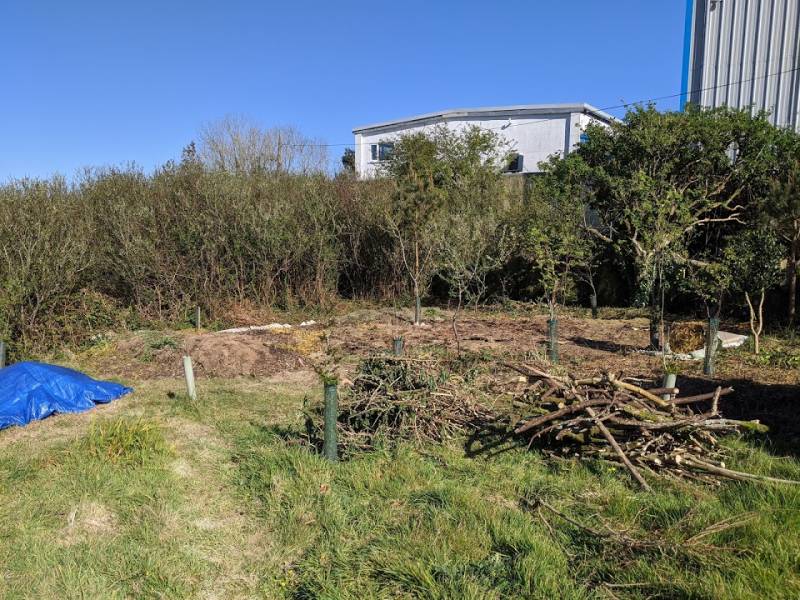
The beginnings April 2020
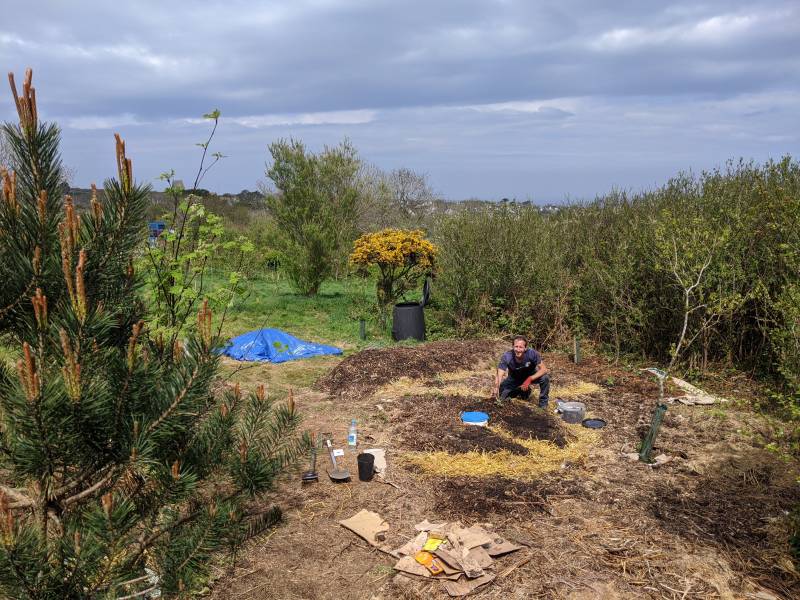
Planting in the veggie beds